Direct or OTA: the question is the mix
Every few months an operator tells us they are getting off the marketplaces. Almost nobody does it and keeps the same revenue. The decision that pays is narrower and less dramatic: which bookings you are happy to pay commission on, and which ones you are paying for twice.
Start by refusing the question as asked
Direct or OTA is a false choice that survives because it makes a good argument at a trade fair. Operators who genuinely leave the marketplaces are either famous, sold out on repeat business, or selling something nobody else has.
The version worth an afternoon is narrower. Of the bookings you paid commission on last season, how many came from someone who had never heard of you, and how many from someone who was always going to buy from you and clicked the first result they saw. The first group is a purchase. The second is a leak.
What a marketplace actually sells you
You are not renting a booking form. You are renting demand, and demand is expensive to make.
- Reach into markets you do not advertise in, in languages you do not write, at times of year when your own marketing is asleep.
- Trust from a buyer who will not put a card number into a domain they have never seen, for a service in a country they have not visited.
- A checkout that already works in their currency, with a payment method their bank will not decline.
- A dispute process where somebody other than you absorbs the first complaint.
That is a real product and it deserves a real price. Commission is not a tax on being small; it is the price of demand you did not have to create. The problem is paying it on demand you already had.
The expensive mistake, and it is always the same one
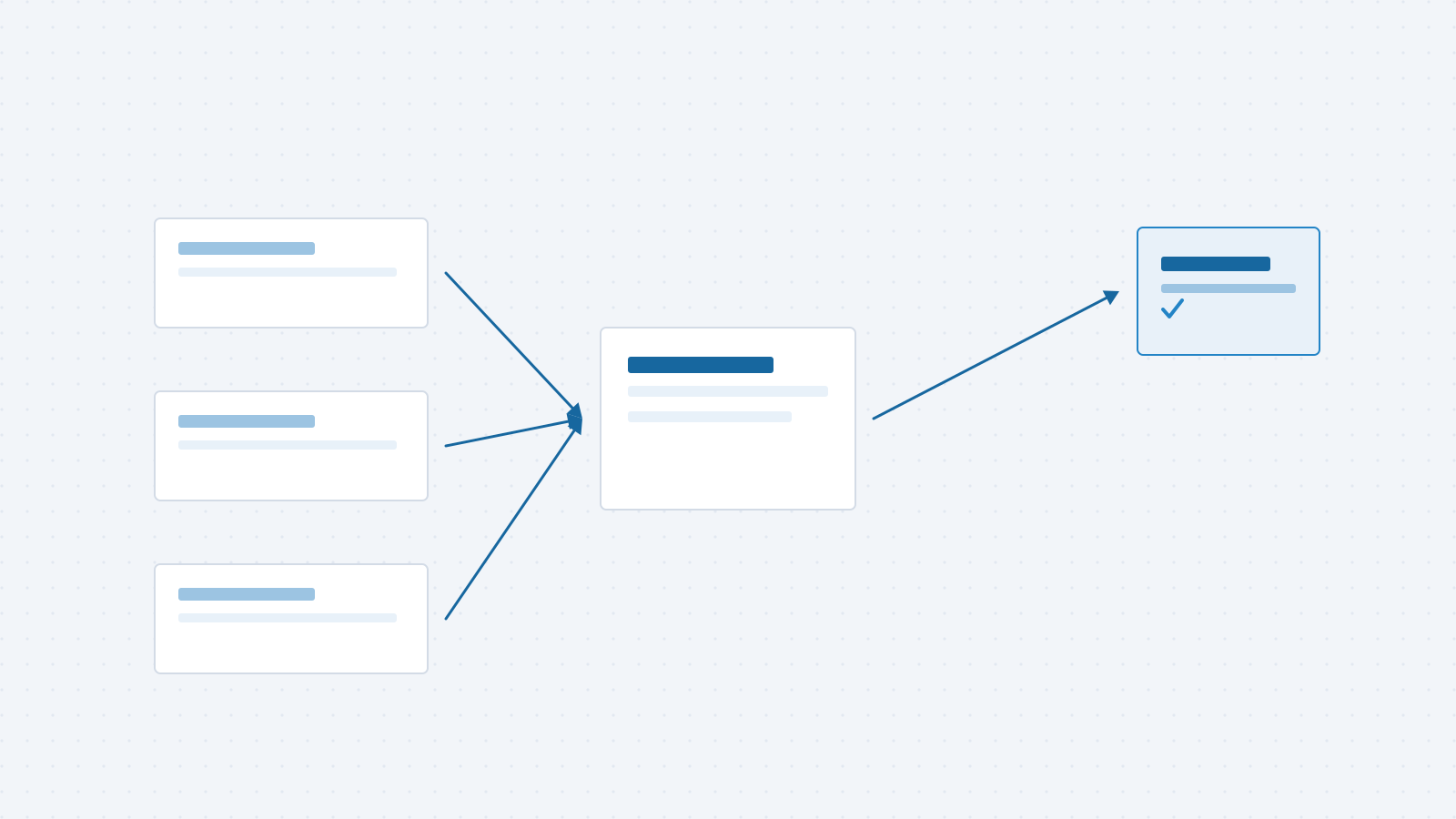
A guest is recommended your day tour by the guide they met yesterday. They remember the name and search it. Above your own site sits your marketplace listing, because the marketplace bids on brand names with a budget you cannot match. They click, they book, and you pay commission on a sale you had already won.
Multiply that by referrals, repeat guests and every business card you handed out. In most operations we look at, that group is a meaningful share of marketplace volume and the only share that is genuinely recoverable. Until you measure it, you are guessing about the biggest number in the decision.
How to tell the two groups apart
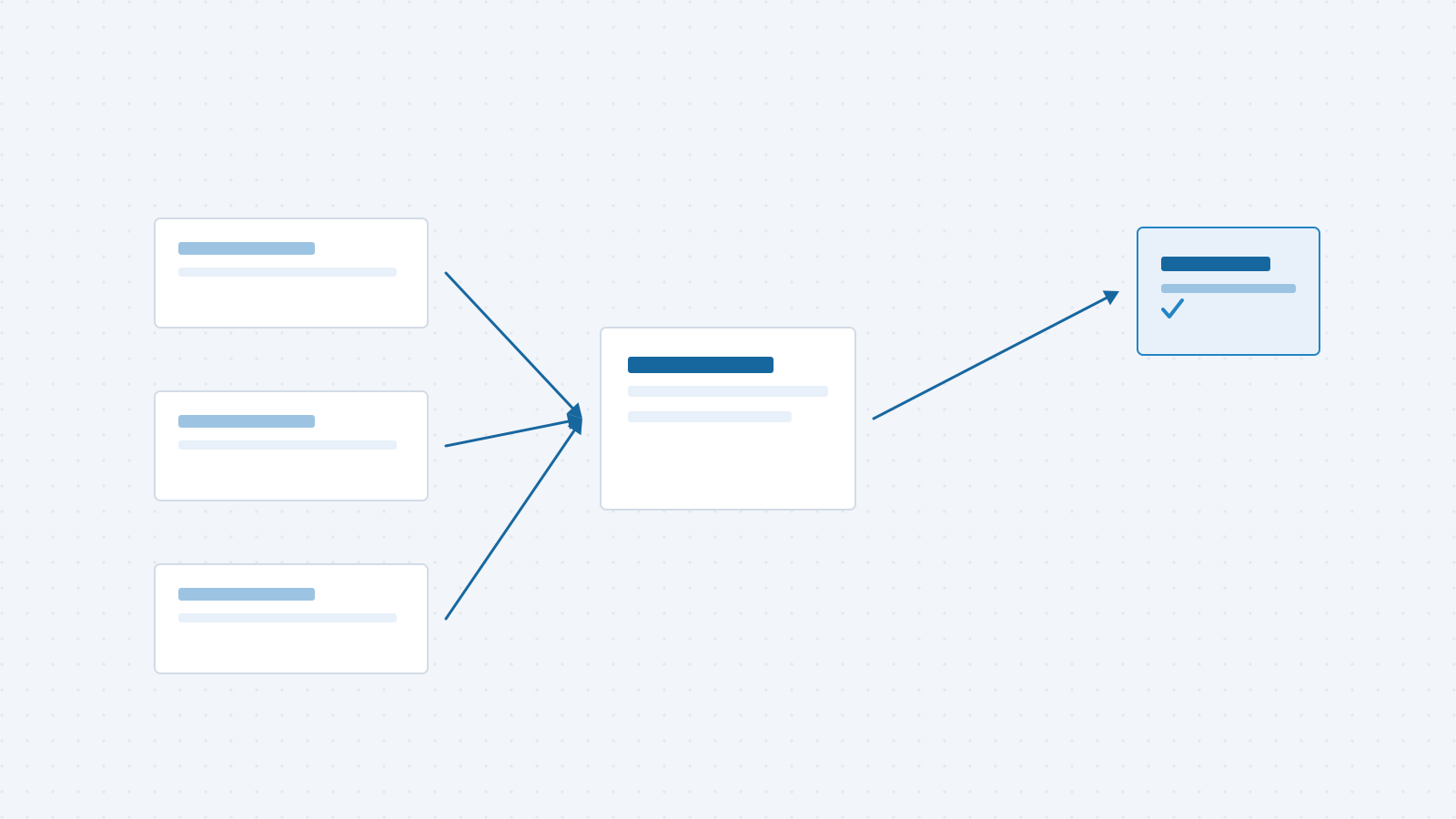
You do not need analytics software for this. You need one season of records and somebody willing to read them.
| Signal | Demand the marketplace created | Demand you already had |
|---|---|---|
| Search term behind the listing | Generic — city, activity, date | Your brand name, or your brand plus a word |
| Repeat and referral | First time, no link to a past guest | Second booking, or a friend of a past guest |
- Ask one question at check-in — how did you first hear about us — and write the answer down. One season of that beats any assumption.
- Pull the search terms report for your own brand name. A marketplace ranking above you for your own name is the leak, and its size.
- Count marketplace bookings that arrive within a day of an enquiry email from the same person. Those are yours, bought back at full price.
The billboard effect, and why it cuts both ways
Listing on a large marketplace raises direct enquiries even from buyers who never book there. People find you in the listing, then look you up to see whether you are real. That is one of the honest arguments for staying listed even when your direct channel is strong.
It has a condition attached. The billboard sends people to your shop, and the shop has to be open when they arrive. If your site has fewer photographs than the listing, no price and a contact form instead of a way to book, the billboard is working for the marketplace at your expense. Before spending anything on a direct campaign, open your own site on a phone, at night, on a slow connection, in the language of your best market.
Rate parity, in plain terms
Most marketplace contracts contain a clause about not offering a better price elsewhere. What it covers varies by platform, contract and jurisdiction. Read your own agreement rather than a summary, including this one.
- Parity clauses generally restrain the public price of the same product on the same terms. They are about the number on the page.
- What they usually do not reach is value: an inclusion, a pickup, a longer cancellation window, a better time slot, a guide who waits.
- Closed groups behave differently from public pages in most contracts — returning guests, members, a rate given by email to somebody who asked.
- Two activities sold together are a new product, not a discount, and nothing stops a specific departure or private option existing only on your own site.
Competing on price against a platform that takes a commission out of that price is a fight you lose twice. Competing on what the buyer receives is rarely restricted.
The cost of the direct channel, including what quotations leave out
Direct selling is not free. It replaces a variable cost with a fixed one, and that is the whole trade: commission is paid only when you sell.
| Cost | What it really is | When it hurts |
|---|---|---|
| Advertising | Buying the demand the marketplace supplied | Out of season, when spend continues and bookings do not |
| Payment processing | Gateway fees, currency spread, dispute fees | On refunds and chargebacks, which you now absorb |
| Response time | Somebody answering within a working hour, in their language | Evenings, weekends, and the day your one person is ill |
| Cancellations | The conversation, the refund, the released seat | Every time — the marketplace used to have that conversation |
| Content | Photographs and descriptions kept current | Continuously — the line that quietly stops being maintained |
Add those up, plus the booking system and its hosting, and you get a monthly number. Divide it by the average commission on one booking: that is how many direct bookings a month the channel must produce to be cheaper than the marketplace. Do the arithmetic before the design conversation.
At what size direct selling starts to pay
There is no universal threshold, but the conditions are consistent. Direct becomes worth building when most of these are already true.
- A visible share of bookings comes from people who already knew your name — referrals, repeats, partners, guides.
- Somebody answers an enquiry within a working hour, in the language it was written in.
- You sell at least one product nobody else lists, so a buyer comparing prices has nothing to compare.
- The fixed monthly cost is smaller than the commission on the same bookings, by the arithmetic above.
If fewer than half of those are true, the marketplace is not overcharging you. It is doing work you are not yet set up to do.
When the right move is to change nothing
This is the section most articles on the subject leave out, because it does not lead to a sale.
- You are entering a market where nobody knows your name. That is what commission is for. Pay it and use the visibility.
- Your volume is a handful of bookings a month. Fixed costs will eat the saving.
- Your enquiries already take a day to answer. Fix that first, with no software involved, and measure what changes.
- Your product is a commodity in a crowded destination. Use the platform as distribution and compete on operations.
- You are about to sell or restructure the business. Do not rebuild a channel the next owner will rebuild again.
The conditional conclusion
- If most marketplace bookings come from buyers who had never heard of you, keep paying commission and stop feeling bad about it.
- If much of that volume is people who already knew your name, the cheapest project available is making your own site easy to find and easy to book — not leaving the platform.
- If you cannot yet tell which is which, that measurement is the whole project this quarter, and it costs one question at check-in.
If you decide the direct channel is worth building, it needs somewhere to hold availability, price and payment under your own brand, not a form that emails the office. That is what izBooking is for, with ranges on the pricing page. Read choosing a booking engine first — it works on us as well as on anyone else.
What travel operators ask us most
Should we hide our prices so people have to enquire directly?
No. A buyer comparing options who cannot see a price usually leaves, and the marketplace listing they can see wins by default.
Hiding prices makes sense only where the price genuinely depends on a specification, such as private groups and MICE, and even then a starting range helps more than it costs.
Can we ask marketplace guests to book direct next time?
What you may say, and when, is set by the platform agreement you signed, and several platforms restrict contact details and rate messaging during the booking.
What is rarely restricted is giving a good enough experience that the guest looks you up themselves, and making sure that when they do, they find a site that works.
Is it worth listing on several marketplaces at once?
Only if your availability is genuinely synchronised. Selling the same seats manually across three platforms produces oversells, and one oversell costs more than a season of the commission you were trying to spread.
If you are on more than one platform, a channel connection stops being a convenience and becomes a requirement.
How long does it take for a direct channel to matter?
Longer than a marketing plan usually assumes. Content that ranks and a brand people search for are built over seasons, not weeks.
The exception is recovering demand you already had — repeat guests, referrals, partners. That part can move within one season because those buyers already know your name.
Read next
Tell us what you are trying to run
What you sell, what you use today, and what is breaking. You get a written answer with an approach and a price range - not a brochure.